Have you ever spent an hour scrolling for a funny book only to end up with a novel that barely made you smile? You are not alone. Humor is deeply personal. What makes one reader laugh out loud might leave another completely flat. That is why finding a truly funny book often feels like the punchline itself is missing.
Here is the thing: most readers waste too much time searching for funny books that match their taste. They try random recommendations or trust generic bestseller lists and end up disappointed. But it does not have to be that way.
This article spotlights the most iconic authors who have mastered the art of humor. We start with Lewis Carroll, whose books like Alice’s Adventures in Wonderland turned nonsense into a brilliant form of comedy. Carroll’s playful language and absurd scenarios still make readers laugh more than a century later. In fact, scholars study his work as a high point of literary nonsense that blends humor with social satire. An analysis of Carroll’s work shows how his nonsense amuses while poking fun at Victorian life.
After we look at Carroll and other great humor writers, we will give you a simple framework to find your next laugh out loud read. You will learn how to match books to your own humor style, so you never waste time on the wrong book again.

For a head start, check out our guide on matching humor styles.
Ready to discover your next favorite funny book? Browse our curated lists and start laughing today.
Lewis Carroll: The Godfather of Nonsense Literature
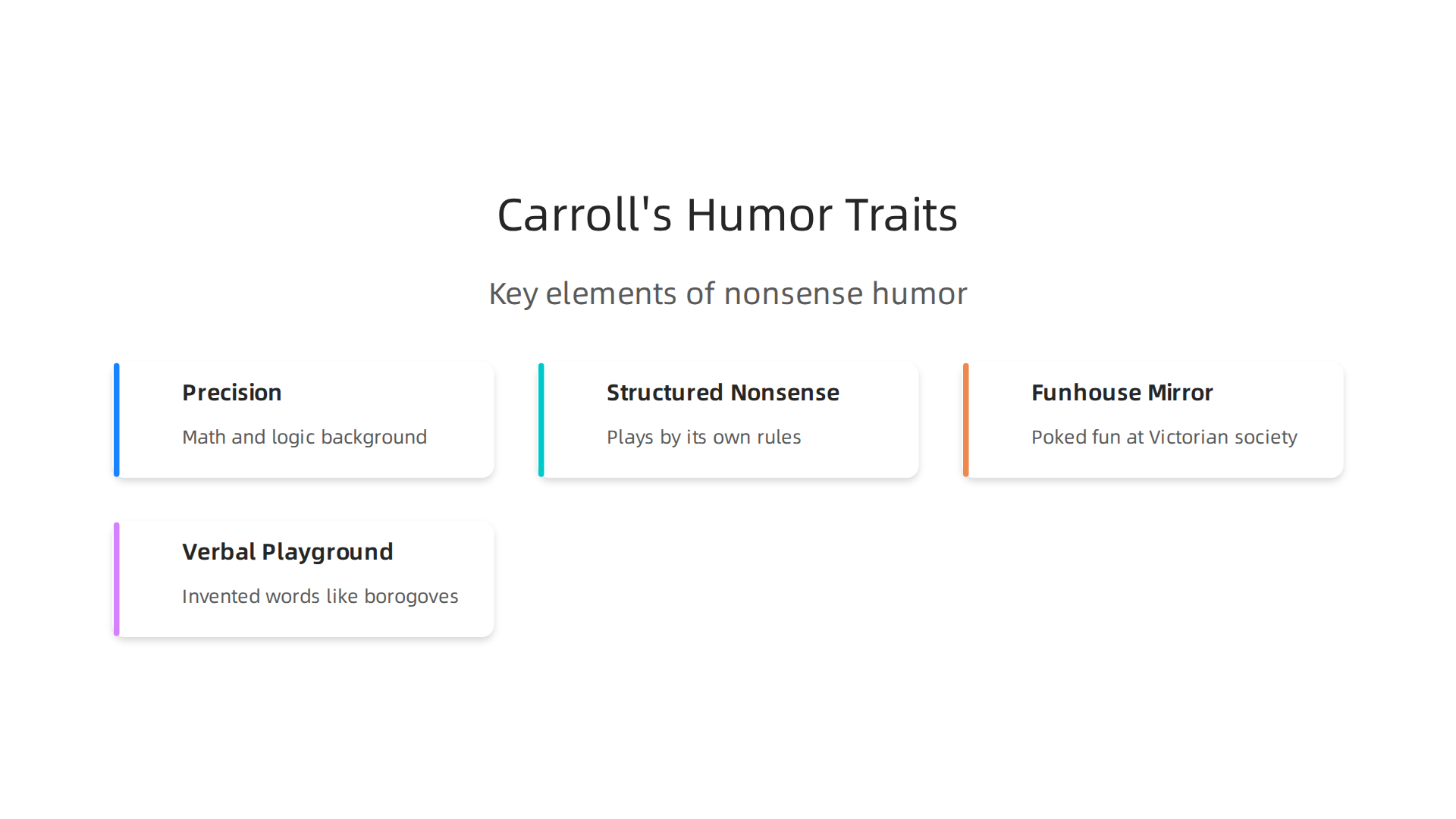
If you think Lewis Carroll just wrote silly children’s stories, think again. Beneath the talking rabbits and grinning cats lies one of the sharpest comedic minds ever to put pen to paper. Carroll’s background in mathematics and logic at Oxford gave his humor a secret weapon: precision.
Every odd word, every backward conversation, every impossible riddle was crafted with the exactness of a puzzle maker.
This is what sets lewis carroll books apart from simple funny stories. His nonsense has structure. It plays by its own rules, and that makes the laughter last. Scholars have noted that Carroll’s techniques of verbal nonsense went on to influence not just children’s literature but also the entire Theater of the Absurd. A study on verbal nonsense shows how playwrights like Samuel Beckett borrowed Carroll’s playful logic to create their own strange worlds. That is a big deal. It means the same mind that made Alice shrink and grow also helped shape modern comedy.
Nonsense as a Mirror
So what was Carroll actually doing? He was holding a funhouse mirror up to Victorian society. The rules of Wonderland are always changing. The Queen screams "Off with her head!" but nobody actually loses one. The Mad Hatter’s tea party never ends. These absurd situations poke gentle fun at the rigid manners, class structure, and rituals of Carroll’s time. One analysis explains that his books feature nonsense characters and scenarios while also carrying deeper symbolism and social commentary. In other words, he made you laugh while making you think.
Take the poem "Jabberwocky." It is full of made up words like "borogoves" and "mome raths." Yet somehow, you still understand the story. A hero slays a monster. That wordplay is genius. It shows that language itself can be a playground.
Why Carroll Still Matters Today
Here is the thing: in 2026, lewis carroll books are more than just classics. They are training wheels for anyone who wants to write funny. His influence shows up in everything from modern satire to quirky sci-fi. Authors like Lemony Snicket and Matt Dinniman carry that same spirit of playful nonsense. Carroll’s works have inspired countless adaptations and homages across film, art, and popular culture.
If you love the feeling of laughing at something that also feels clever, Carroll is where that tradition began. His books prove that humor does not have to be shallow. It can be strange, smart, and deeply human all at once.
Want More Laughs Like This?
Carroll opened the door for generations of funny writers. If you want to find modern books that carry that same blend of wit, warmth, and absurdity, check out our list of funny book series that balance laughter and heart. And if you are ready to discover your next great read right now, browse our curated lists and start laughing today.
The Golden Age of Satire: Mark Twain and the American Humor Tradition
If Lewis Carroll used math to build his nonsense worlds, Mark Twain used a sharp eye for truth. Twain saw the world around him and decided to write about it. But instead of a boring lesson, he gave us a punchline. And that punchline still echoes today.
Twain grew up in a divided America. He saw slavery, inequality, and political games up close. And he laughed at it all. But his laughter had a purpose. He used satire to shine a light on hypocrisy.
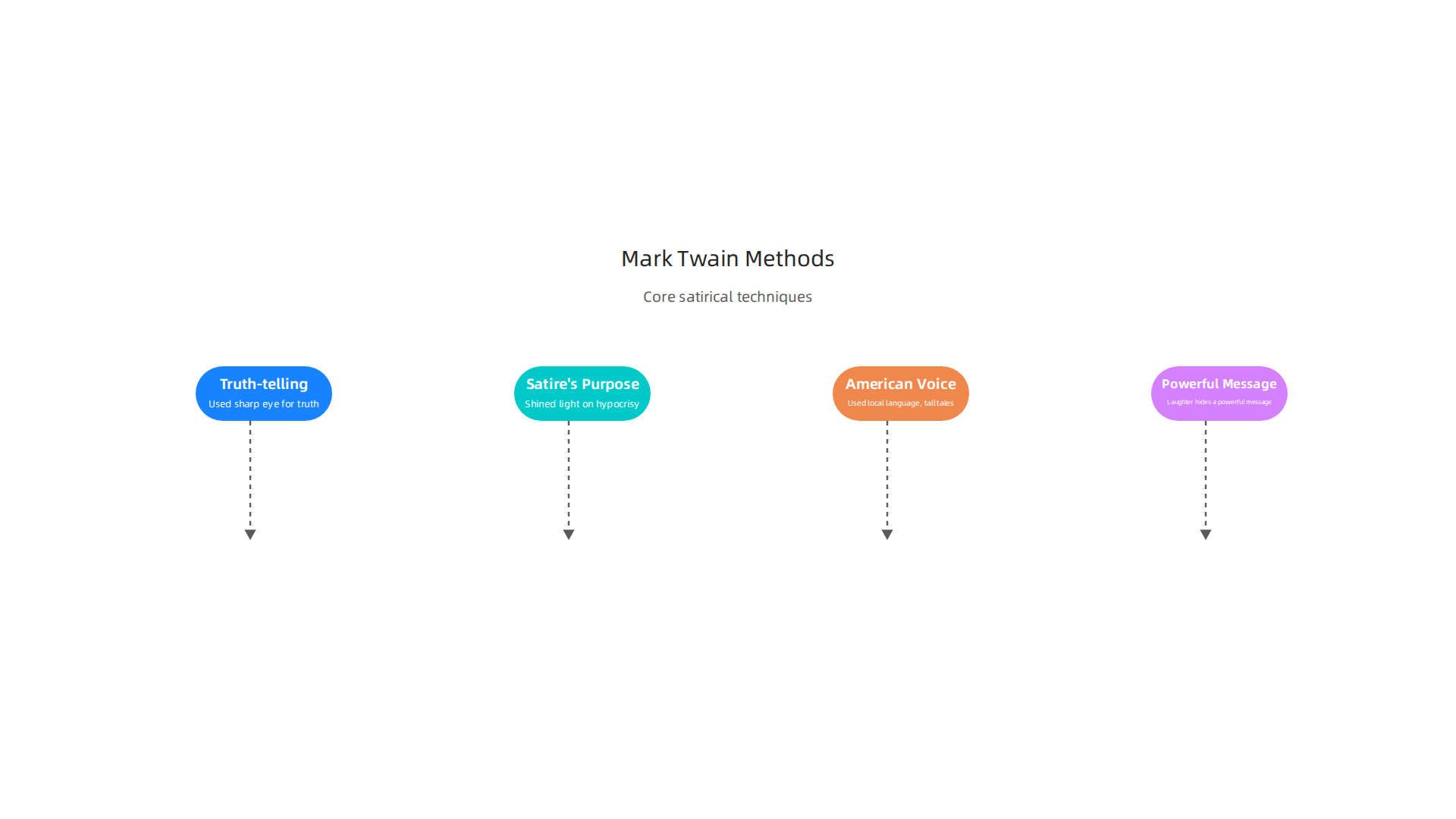
He criticized societal norms and human folly with a dose of sarcasm that made the truth easier to swallow. Whether he was writing about a fake king or the absurdity of racism, Twain made you think while you laughed.
He also gave America its own voice. Before Twain, everyone tried to write like they were from England. Twain said no. He wrote in the local language of the Mississippi River. He used tall tales and regional dialects. The Innocents Abroad made fun of American tourists and old European traditions. His comic genius took on serious issues and violated the strict rules of Victorian culture. It was a new kind of humor, one that felt rough and real.
His best book, Adventures of Huckleberry Finn, is still a masterclass in satire. It looks like a simple story about a boy and a raft. But it is a deep dive into freedom, race, and humanity. The laughter hides a powerful message. This mix of humor and sharp social commentary became the hallmark of his career.

So where Carroll was all about wordplay, Twain was all about truth-telling. Both are funny in very different ways. But Twain proved that satire could change minds. If you want to read modern books that carry that same fire, authors like Matt Dinniman and Lemony Snicket are great places to start.
Want to find books that blend humor with a deeper purpose? Learn how to find funny books that match your humor style. Or if you are ready for a story that makes you laugh and feel at the same time, check out funny book series with heart.
Ready to start laughing right now? Read Book 1 of The Ridiculous series and see how modern satire keeps the tradition alive.

British Wit: From P. G. Wodehouse to Douglas Adams
Mark Twain used satire to punch America in the gut. But across the Atlantic, British writers took a different path. They perfected the art of the polite jab. They used understatement, irony, and precise wordplay. And it all started with a tea-drinking Englishman who wrote about a butler and his clueless boss.
P. G. Wodehouse was the master of the comedy of manners. His Jeeves and Wooster series is pure gold. Bertie Wooster is a wealthy, dim-witted young man who keeps getting into trouble. Jeeves is his unbelievably smart butler who saves him every time. The jokes come from the polite clash between Bertie’s foolishness and Jeeves’s calm control. Wodehouse wrote endless variations on the same theme, but nobody cared. What Wodehouse writes is pure word music. He made nonsense feel elegant.
Wodehouse did not invent British humor. That honor goes further back. Before him, there was Lewis Carroll, whose nonsense verse and wordplay set the foundation. His lewis carroll books like Alice’s Adventures in Wonderland are still some of the funniest and most absurd works ever written. Carroll showed that throwing logic out the window could create pure comedic magic. That freedom to play with language echoes through all British wit.
Then came Douglas Adams. He took the polite absurdity of Wodehouse and threw it into outer space. The Hitchhiker’s Guide to the Galaxy is science fiction, but it is also a hilarious satire of bureaucracy, technology, and human stupidity. Adams grew up reading classic British comedy. He was reared on Lewis Carroll, P.G. Wodehouse, and Monty Python. You can see the lineage. The understated humor, the long digressions, the perfectly timed punchlines.
Adams is often called the science fiction version of P.G. Wodehouse. His books were groundbreaking and funny when they debuted, and like all classics, they still make you laugh. The difference is that Adams mixed his humor with big ideas about the meaning of life, the universe, and everything. Wodehouse kept his world small and silly. Adams made the whole cosmos silly.
The British tradition of wit is alive today.

Authors like Matt Dinniman carry that same love for absurdity and sharp dialogue. If you enjoyed the respectful nonsense of Wodehouse and Adams, you will love modern series that blend laughter with feeling.
Want to discover more books that make you smile? Browse our curated lists and recommendations to find your next laugh. Or if you are ready for a wild ride, start the sci-fi comedy made for laugh-first readers and see how the tradition continues.
Modern Masters: How Contemporary Humor Authors Carry the Torch
The tradition of funny writing did not end with Douglas Adams. It evolved. Today, a new generation of authors takes the nonsense of Lewis Carroll, the satire of Mark Twain, and the polite absurdity of P. G. Wodehouse and makes something fresh. They write about wizards, talking animals, dysfunctional families, and the weirdness of everyday life. And they prove that humor still has plenty of room to grow.
Terry Pratchett is the most direct inheritor of the British comedy tradition. His Discworld series is one of the longest running and most beloved humorous fantasy sagas ever written. Pratchett borrowed the witty dialogue and absurd premises of Wodehouse and Adams. But he added something new. He used fantasy worlds to make sharp points about real world issues like politics, death, and discrimination. His books are hilarious, but they also make you think. You can see the influence of lewis carroll books in Pratchett’s love for wordplay and nonsense logic. Like Carroll, Pratchett trusted readers to follow the joke even when it got weird.
Across the Atlantic, Christopher Moore blends the satire of Twain with the absurdity of Carroll. Moore writes books about everything from vampire love triangles to a raven who works customer service. His humor is louder and more American than Pratchett. But the DNA of Carroll is still there. Moore creates worlds where the rules are bent and the characters are delightfully strange. If you enjoy stories that start normal and then dive into total chaos, Moore is your author. You can browse our curated lists to find authors like Moore who mix laughter and weirdness.
David Sedaris takes a different path. He writes personal essays about his own life. No dragons, no sci-fi spaceships. Just real stories about his family, his job, and his daily struggles. Sedaris turns ordinary moments into comedy gold. His style is closer to the observational humor of James Thurber than the fantasy of Carroll. But Sedaris still relies on the same trick that made Carroll famous. He finds the absurd in the normal. His essays remind us that you do not need a rabbit hole to find nonsense. You just need to pay attention.
These modern masters prove that humorous fiction is alive and well in 2026.

Whether you love fantasy, sci-fi, or real life, there is a funny book waiting for you. And the best part? The tradition of laughing at the world is not going anywhere.
Ready to find your next big laugh? Browse our curated lists to discover more authors who carry the torch of great comic writing.
A Reader’s Guide: How to Choose the Right Funny Book for Your Mood
Ever picked up a funny book that everyone raved about, only to feel completely bored? That happens more often than you think. Humor is deeply personal. What makes your best friend laugh might leave you cold. The trick is to match the book to your current mood.
Most readers face what experts call discovery fatigue. You scroll through lists, read blurbs, and still end up disappointed. A 2026 reader survey found that more than 30% of people read over 100 books a year. That is a lot of reading. Yet finding the right laugh can still feel like a chore. A simple framework helps. Instead of guessing, ask yourself: What kind of funny am I in the mood for?
Match Your Mood to a Humor Subtype
Different humor styles trigger different reactions. Nonsense makes you smile at the absurd. Satire makes you think while you laugh. Dark comedy gives you an edge. Wordplay rewards your brain. Here is a handy table to find your next read fast.
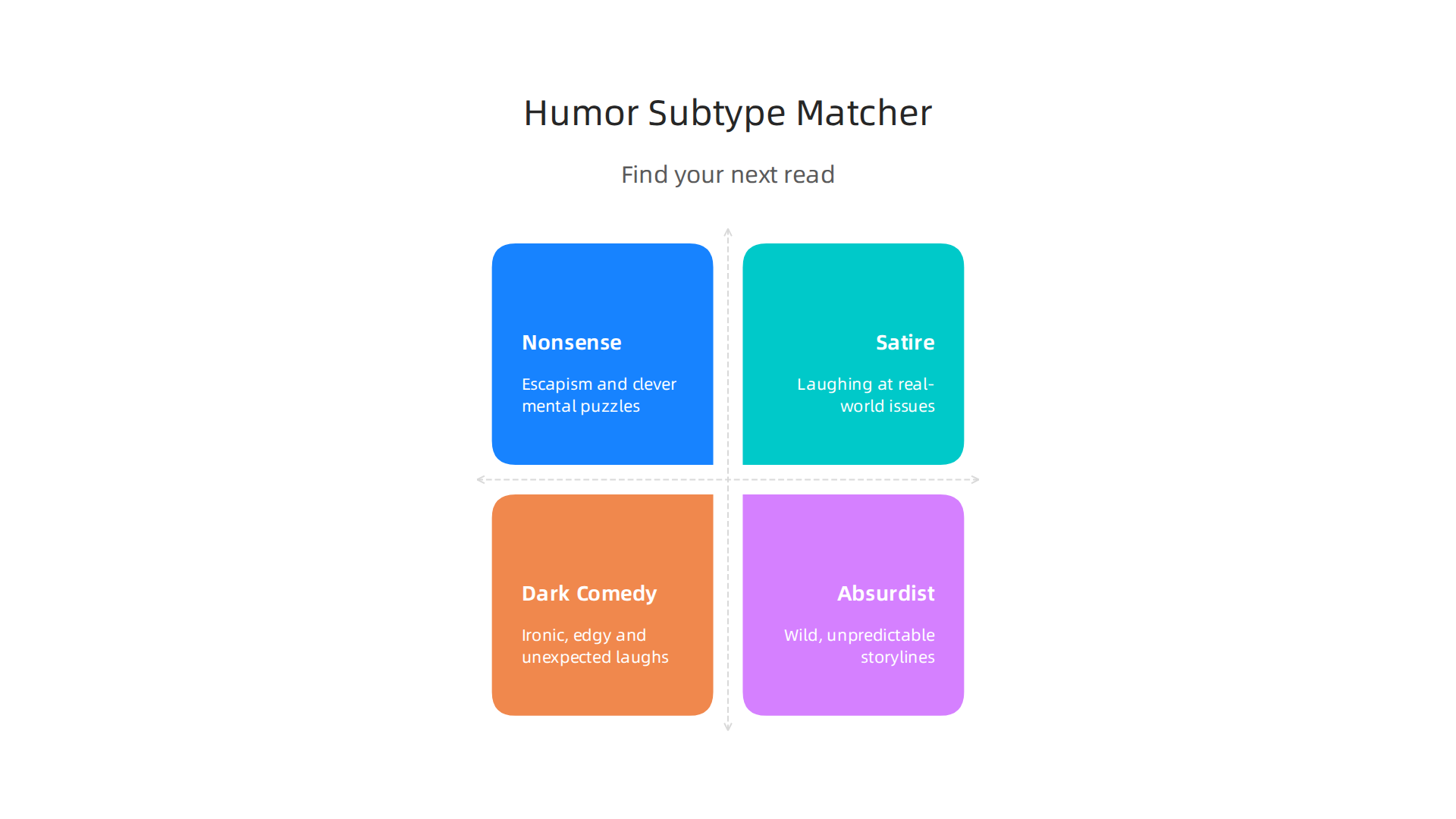
| Humor Subtype | Best For… | Authors to Try |
|---|---|---|
| Nonsense & Wordplay | Escapism and clever mental puzzles | Lewis Carroll books, Lemony Snicket books |
| Satire & Social Wit | Laughing at real-world issues | George Orwell books, James Baldwin books |
| Dark Comedy | Ironic, edgy, and unexpected laughs | Matt Dinniman books |
| Absurdist Adventure | Wild, unpredictable storylines | Matt Dinniman books (again!) |
Nonsense and wordplay are perfect when you want to leave reality behind. If you loved the lewis carroll books that twisted logic into joy, try lemony snicket books for a darker but equally playful journey. Both trust you to follow the joke even when it gets strange.
Satire and social wit work best when you want to laugh at the world. George Orwell books like Animal Farm use humor to make sharp political points. And yes, even james baldwin books carry a biting wit beneath the serious themes. His essays often land a punchline that sticks with you.
Dark comedy and absurdist adventure suit readers who like their humor with a kick. Matt dinniman books in the Dungeon Crawler Carl series blend video game logic, death, and hilarious dialogue. It is not for everyone. But if you want something completely fresh in 2026, these deliver.
How to Use This Framework
Start with your current mood. Are you stressed? Go for nonsense. Feeling cynical? Try satire. Want a wild escape? Pick absurdist sci-fi. This method cuts down the time you spend searching and raises the odds of a happy reading session.
Tip: If you still feel unsure, read our full guide on how to find funny books that match your humor style. It walks you through your personal humor profile step by step.
The goal is to enjoy the journey. With the right match, you will laugh more and waste less time. Ready to try? Browse our curated lists to start your next funny adventure today.
The Lasting Impact: Why Lewis Carroll Still Matters
Now that you know how to match Carroll’s style of nonsense to your mood, let’s look at why his work still matters today. You might think a book written in 1865 would feel outdated. But Alice’s Adventures in Wonderland is more alive than ever.
Here is the thing. Carroll did not just write a silly story. He created a whole new way to play with language. His nonsense poems like "Jabberwocky" use made-up words that somehow make perfect sense. Scholars have studied this carefully. One analysis of Carroll’s work shows that his nonsense is actually a "marvelous aesthetic achievement" rather than just random fun. He broke the rules of language in a way that still feels fresh in 2026.
Carroll in Movies, TV, and Theater
You have probably seen an Alice adaptation without even realizing it. There are over 100 works based on Carroll’s two Alice books. That includes films, TV shows, stage plays, and even video games. Tim Burton’s 2010 movie brought a dark, strange Wonderland to a new generation. Broadway shows keep reinventing the story. Even the 1951 Disney cartoon is still a classic.
Carroll’s influence goes deeper than direct adaptations.
His style of absurd humor shaped the Theater of the Absurd. Playwrights like Samuel Beckett borrowed Carroll’s tricks to create strange, funny, and meaningful plays. One research paper explains that "the playwrights of the Absurd find themselves making use of such techniques and stylistic devices as were used by Lewis Carroll." So when you laugh at a weird scene in a modern play, you are feeling Carroll’s echo.
From Memes to Video Games
Carroll’s humor fits perfectly into the internet age. Why? Because his jokes are built on wordplay, illogical logic, and surprising twists. Those are the same ingredients that make memes go viral. Think about the "We’re All Mad Here" quote. It shows up on T-shirts, coffee mugs, and social media posts all the time.
Video games also borrow from Wonderland. Games like American McGee’s Alice and the Alice: Madness Returns series turn Carroll’s world into dark, interactive adventures. Even games that do not directly reference Alice use his style of surreal humor.
Why This Matters for Your Reading Choices
Understanding Carroll’s legacy helps you enjoy modern funny books more. When you spot a nonsense poem in a lemony snicket books novel, you see the connection. When a matt dinniman books title like Dungeon Crawler Carl throws absurd rules at you, you recognize the same playful spirit.
Carroll showed us that humor does not need to follow a straight line. You can laugh at the strange, the illogical, and the unexpected. That is why lewis carroll books still top reading lists in 2026. They remind us that sometimes the best jokes make no sense at all.
If you want to find more books that capture this playful spirit, browse our curated lists to discover your next laugh.
Summary
This article explains why finding truly funny books often feels frustrating and then shows you a better way: learn from the masters and match books to your own humor taste. It highlights key comic authors—Lewis Carroll, Mark Twain, P. G. Wodehouse, Douglas Adams—and explains how their different approaches (nonsense, satire, polite irony, cosmic absurdity) shape what makes readers laugh. The piece also surveys modern writers like Terry Pratchett, Christopher Moore, and David Sedaris who carry those traditions forward. Most important, it gives a simple, mood-based framework to pick the right funny book quickly and avoid discovery fatigue. You’ll learn what humor subtypes work for stress relief, satire, dark comedy, or absurd escape, plus practical places and lists to find curated recommendations. After reading, you’ll be able to identify the humor style you want and choose books that actually make you laugh.